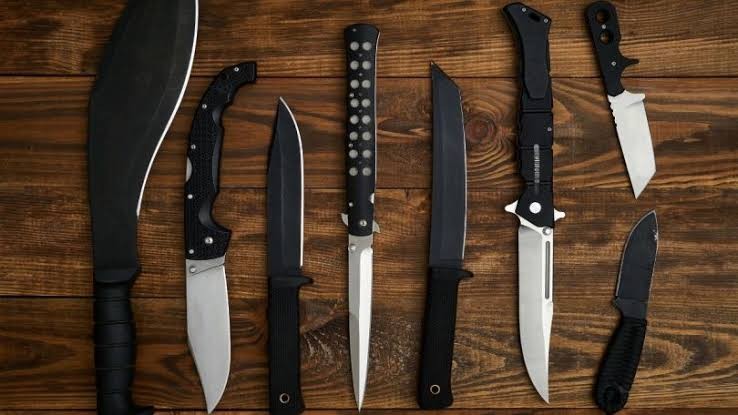
Blades & edge care
Blade steel for game care: what actually happens on hide
Edge life on an animal is counted in hides, not in rope cuts. Hair holds grit, dried blood is abrasive, and the steel that wins a bench test often loses a week of caping.
By Wren Castellanos, caping and cape repair
Every steel chart you have read was built on cardboard or manila rope, cut in clean conditions by a machine. That measurement is real and it is not the one that matters here. A cape is dirty, wet, full of grit and interrupted by cartilage, and the edge that survives it is not always the one with the highest number.
How many hides does an edge really last?
Between one and eight, depending on the steel and the animal. Anything more than that on real hide is a claim, not a measurement.
| Steel | Hides per edge | Camp resharpening | Rust risk in wet work | Where it earns its keep |
|---|---|---|---|---|
| 1095 carbon | 1 to 2 | Very easy, strops back | High, needs wiping | Cold weather, gloved hands, quick touch-ups |
| 440C | 2 to 3 | Easy, comes back on a rod | Low | A first fixed blade, wet coastal work |
| CPM-3V | 4 to 5 | Moderate, wants diamond | Moderate | Heavy skinning with bone contact |
| S35VN | 5 to 6 | Slow, needs a stone | Low | Long caping sessions, detail work |
| M390 | 6 to 8 | Difficult in camp | Very low | Multi animal days, guided ranch work |
The spread inside a single steel is wider than the spread between steels. The same S35VN blade that gives six clean hides on aoudad gives three on a muddy whitetail dragged through a creek bottom, because the abrasive is on the animal, not in the steel.
What actually dulls a caping blade?
Grit in hair, dried blood, and bone contact, roughly in that order. Very little of it is the cutting itself.
- Dust and sand held in the hair coat, which is why a dragged animal costs more edge than a packed one
- Dried blood, which is mildly abrasive and builds on the edge through a long session
- Cartilage and bone at the ear butt, the nasal septum and the leg joints
- Sheath grit, the one nobody counts: a dirty sheath strops the edge backward every time the blade goes home
The last one changes behaviour more than any steel choice. Wipe the blade before it goes back, and clean the inside of a leather sheath at the end of the season. A blade that leaves a sheath duller than it entered is not a steel problem.
Expert opinion, Elias Roybal, butchering and meat care: “Rust risk is real out here and people underrate it because West Texas is dry. Blood is wet, and a carbon blade left overnight in a wet sheath comes out with pitting along the edge that no strop fixes. I have thrown away two good knives that way.”
Elias Roybal, Marfa, Texas
What trade does nobody put on the label?
Edge retention and field sharpenability move in opposite directions. Buying one means giving up the other, and there is no steel that escapes it.
Hard, high-carbide steels like M390 hold a corner the way a hardened drill bit does: far longer than anything softer, right up to the moment they chip instead of rolling. When that happens on the second day of a five day hunt, you are carrying a knife you cannot bring back with a pocket rod. Softer steels give up half the edge life and hand you the ability to fix them on the bottom of a coffee mug if you have to.
For guided work where a fresh knife is 40 feet away in a truck, hard steel is the right answer. For a solo hunt four miles in, it is usually the wrong one. The steel question is really a logistics question wearing a metallurgy costume.
Where does a custom blade change the answer?
Not in the steel. In the geometry, the heat treat and the shape the catalogue will not make.
The steel names above are available in production knives at every price. What is hard to buy off a shelf is a two inch caper with a fine point, a thin grind behind the edge and a handle sized for a wet hand. Volume manufacturing builds around field dressing, because that is what most buyers do, so the caping shape stays a specialty item.
- Blade length under two and a half inches, so the point can turn inside an eye socket or an ear butt without pushing through hide.
- Thin behind the edge. Blade stock thickness matters far less than how thin the primary grind runs, and that is a maker decision, not a steel decision.
- A heat treat matched to the work rather than to the datasheet. The same steel run two points softer takes a rolled edge instead of a chip, which is the failure you want in the field.
- A handle that indexes in the dark. Wet hands, cold fingers and a headlamp is the real test environment, not a bright bench.
This is why capers drift toward makers rather than brands. It is not a status move and it is not about the steel on the blade, which is usually the same alloy the factory buys. It is that a person grinding one knife at a time will put the geometry where the work is, and a production line cannot.
Expert opinion, Odell Prather, hides, horn and tanning: “Ask a maker what hardness they run and whether they will grind it thinner behind the edge for hide work. If the answer is a shrug, that is your answer. The good ones talk about that before they talk about the steel.”
Odell Prather, Fort Davis, Texas
Notes from the season log
Four things our own numbers say that surprised us when we added them up.
- Animal condition predicted edge life better than steel choice did. Dragged and muddy animals cut edge life roughly in half across every steel we carried.
- Two knives beat one good knife. Swapping at the halfway point produced better cuts and fewer nicked hides than sharpening mid job.
- Stropping every second animal roughly doubled the working life of the mid-range steels. It did almost nothing for M390, which does not roll, it chips.
- The most common cause of a ruined cape in our own hands was not a dull knife. It was a sharp knife used in a hurry at dusk.
That last line is uncomfortable to publish and it is what the log says. Two of the brisket cuts I have had to repair this year were made by people on this site.
What we would actually recommend
One mid-range fixed blade you can sharpen anywhere, plus a short caper. That combination outperforms one expensive knife in almost every situation we log.
If you are buying one knife, buy the one you can bring back on a rod at camp. If you are buying two, make the second one short and fine-pointed and keep it clean for head work only. Sharpening technique matters more than either purchase, and that is covered in field sharpening for caping. The cut sequence those blades are doing is in the caping guide.
One thing no steel fixes: a blade that has been through a punctured gut belongs in hot soapy water before it touches meat again. Handling and cooling guidance from Texas A&M AgriLife Extension covers the tool as well as the carcass, and any animal that looked or behaved abnormally before the shot is a call to Texas Parks and Wildlife rather than a judgement made at the tailgate.
This guide covers one stage of a longer sequence. The whole arc is in game processing from the field to the freezer.

Written by
Wren Castellanos
Caping and cape repair · Alpine, Texas
Wren does caping and cape repair at a studio in Alpine, Texas, and keeps the season logs the numbers on this site come from.
More from Wren in field notes.