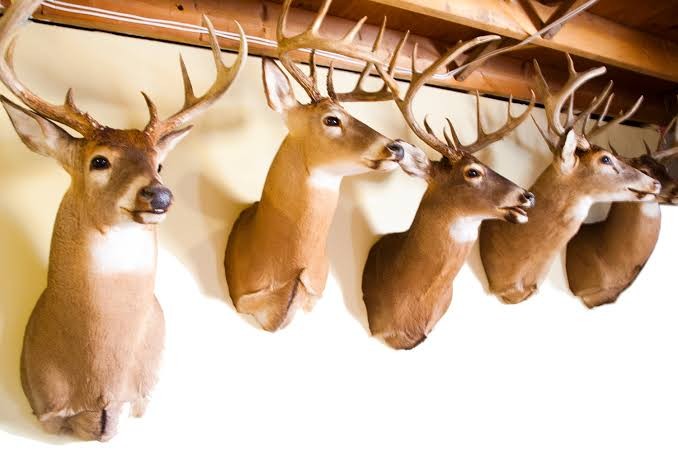
Field dressing & caping
How to cape a shoulder mount without ruining the brisket line
Cut the cape line a full hand behind the front legs, ring the legs above the knee, and open up the back of the neck. Almost everything else on a cape is recoverable. That first line is not.
By Wren Castellanos, caping and cape repair
A shoulder mount needs more hide than the finished mount shows. The form has to be covered past the shoulder, tucked and glued underneath, and there is no way to invent material that was left on the carcass. Every year I take in capes that were cut with care and skill, six inches too far forward.
Where does the cape line actually go?
Behind the front legs by at least the width of your hand, and further on a heavy-bodied animal. Extra hide costs you nothing at all.
On an average West Texas whitetail that means the line falls roughly 8 to 10 inches behind the shoulder, in line with the last rib. On a mule deer or an aoudad, go to 12 or 14. A studio can always trim a cape down. Nobody can grow one.
The way I check it in the field is simple and slightly ridiculous: lay your forearm along the animal with your wrist at the point of the shoulder, and cut behind your elbow. That is a bad measurement in every technical sense and it has never once given me a cape that was too short.
The three cuts, in order
Cape line first, then leg rings, then the line up the back of the neck. Cutting them out of order is how the hide ends up twisted.
- Ring the body well behind the front legs, all the way around. Cut through hide only, with the blade angled out, so you are not opening the body cavity.
- Ring each front leg above the knee, then run a cut from each ring up the back of the leg to meet the body ring. Keep those cuts on the back edge of the leg where the seam disappears in the finished mount.
- Cut up the centre back of the neck from the body ring to a point between the ears, then make a Y toward the base of each antler. On a hornless animal, stop at the poll.
- Skin forward toward the head and stop at the base of the skull. Do not attempt the face in the field unless you have done it before and have time.
Leaving the head attached is not laziness. A studio would far rather receive the whole head with the cape than a face somebody turned in a hurry at dusk. Confirm the tagging and transport rules for a detached head with Texas Parks and Wildlife before you do it either way, because those rules differ by county and by disease management zone.
Why is the brisket the cut you cannot undo?
Because the brisket area does the work of covering the front of the form, and there is no seam that can hide a shortage there.
Hide taken from further back can be stitched in behind the shoulder, where the seam sits under the shelf of the mount and nobody sees it. There is no equivalent trick at the front. A cape cut short in the brisket leaves the taxidermist choosing between a smaller form, which changes the whole look of the animal, or a donor cape from another deer, which changes the colour.
A hunter brought me a good eight point in November two years ago, cut about four inches in front of the last rib. It was a clean cut, done with a sharp knife, by somebody being careful. The mount went out on a donor cape in March and the bill went from 650 dollars to 1,100. Nothing about the shot, the recovery or the weather was wrong. It was four inches.
Expert opinion, Elias Roybal, butchering and meat care: “Do the cape line before you open the carcass, not after. Once you are gutting, you are in a hurry and you are thinking about meat, and that is exactly when a person creeps forward with the knife. Two minutes at the start saves the whole mount.”
Elias Roybal, Marfa, Texas
What a taxidermist measures before ordering a form
Three numbers decide which form the mount goes on, and almost nobody takes them in the field.
| Measurement | Where it is taken | Typical whitetail | What goes wrong without it |
|---|---|---|---|
| Eye to nose | Front corner of the eye to the tip of the nose | 7 to 8 inches | Form face is too long or short, expression looks wrong |
| Neck circumference | Base of the skull, behind the ears | 16 to 20 inches | Cape will not close, or bags at the throat |
| Girth | Behind the front legs, around the chest | 34 to 40 inches | Form shoulders sit wrong under the hide |
| Antler spread | Widest outside point to point | 14 to 20 inches | Pedicle set and head angle guessed rather than matched |
Take them with a soft tape before the cape comes off, write them on your phone, and send them with the cape. A cape with numbers on it gets ordered on the right form the day it arrives. A cape without them waits until somebody guesses.
Which blade actually does this work?
A short one. Two to two and a half inches of edge, with a fine point and enough belly to skin without stabbing.
Caping is not one long cut. It is several hundred short ones, many of them inside an ear butt, a lip line or an eye socket, where a four inch blade cannot turn without putting the point through hide you need. Length that feels reassuring on a skinning job becomes a liability at the head.
- Short edge, ideally under two and a half inches, so the point can turn inside tight work
- Fine tip that still has some steel behind it, because a needle point snaps on cartilage
- A handle you can hold with wet, cold hands without choking up on the blade
- Enough edge stability to hold through one animal without a full resharpen
This is where a lot of capers end up with custom knives rather than catalogue ones. The mass market builds hunting blades around field dressing, so the short, fine-pointed caper is a specialty item, and specialty is exactly where a maker who grinds one at a time has the advantage. It is not a status purchase. It is a shape problem the catalogue does not solve.
Expert opinion, Odell Prather, hides, horn and tanning: “Whatever knife you use, wipe it. Hair carries grit and dried blood is abrasive, so a blade that goes back in the sheath dirty comes out duller than it went in. I have watched people blame the steel for what the sheath did.”
Odell Prather, Fort Davis, Texas
What goes wrong after the cape is off
Heat, folding and delay, in that order. The cutting is finished, and the cape can still be lost inside three hours.
- Rolled hair side out and left in a truck bed, where the flesh side holds heat against itself
- Stuffed in a plastic bag with no ice, which turns into a warm humid box within the hour
- Left flat in the sun while somebody deals with the meat, so half the hide cooks and half does not
Get it flat, get it cool, get salt on it the same day. The full schedule is in the guide on how much salt a cape actually needs, and the decision between salting and freezing is covered in salt or freeze.
What surprises people at the intake bench?
Four things I explain almost every week, none of which are obvious from a video.
- Hair slip usually shows first on the brisket and low neck, not on the back, because that is where the hide sat against warm ground.
- A cape can look and smell fine and still be lost. The test is a gentle tug on the hair, not the nose.
- Bullet holes are not a problem. A hole is a stitch. A missing section is a problem.
- Blood in the hair matters less than most hunters think, and freezing wet blood into the hair matters more.
The last one catches people who did everything else right. Blood that dries in place comes out at the tannery. Blood frozen into the hair for four months sets like glue and takes hair with it when it is worked loose.
Do this once and it stops being frightening
The first cape anybody does badly is the one they learn from, which is why the line should be generous the first time.
Cut it further back than you think you need, take the three measurements, keep the head on, and get the hide flat and cool. That is the whole job at the level that matters. Refinement comes later, and it comes from doing it, not from reading about it. Guidance on carcass handling from Texas A&M AgriLife Extension covers the meat side of the same hour, and it is worth reading alongside this.
This guide covers one stage of a longer sequence. The whole arc is in game processing from the field to the freezer.
Written by
Wren Castellanos
Caping and cape repair · Alpine, Texas
Wren does the caping, measuring and cape repair at a studio in Alpine, Texas. About 340 of the capes she has finished were cut by somebody else.
More from Wren in field notes.