Author
Wren Castellanos
Caping and cape repair · Alpine, Texas
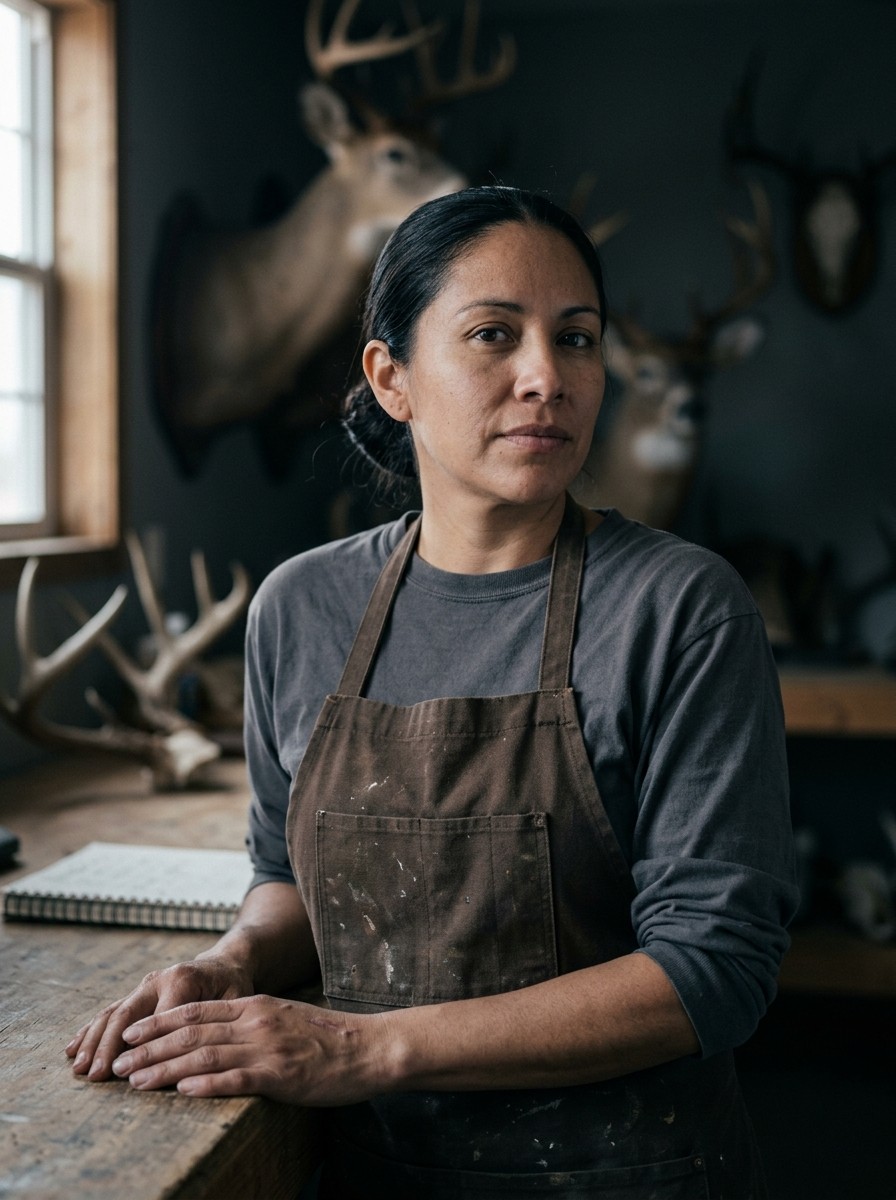
Wren does the caping and the repair work at a studio in Alpine. Roughly 340 of the capes she has finished were cut by somebody else, which is where most of what she knows came from.
What does Wren cover here?
Cape lines, ear butts, lip and eye detail, cape measurement, and the repair work that follows a bad field cut.
Her guides tend to be the uncomfortable ones. A cape arrives, it is two inches short in front, and there is no honest fix that does not involve either a donor hide or a smaller form. She would rather write that down once than explain it at the counter forty more times.
She also handles the measuring standards on this site. Eye to nose, neck at the base of the skull, girth behind the front legs: three numbers that decide which form the mount goes on, and three numbers almost nobody takes in the field.
How Wren got here
She grew up on a hunting lease outside Marathon and started sweeping floors in an Alpine taxidermy studio at nineteen.
The studio owner put her on ear turning in the first winter because nobody else wanted it, and she stayed on it for two seasons. Nine years in, she does the caping, the cape repair and the intake conversation. She keeps a bound log of every cape that comes through the door: date, species, condition on arrival, and what it cost to fix.
What does Wren get wrong?
She over-salts, and she knows it.
Her own capes get more salt than the schedule calls for, on the theory that the extra cannot hurt. It can. Heavy salt on a thin summer cape draws water out fast enough to stiffen the hide before it drains, and Odell has sent two of hers back to be relaxed. She left that in the guides rather than quietly correcting the numbers, because the mistake is common and the correction is cheap.
More about how this site works is on the about page. Everything Wren has written is filed under field notes.